|
Today's is the first in a series of four newsletters by Jasmine Michel exploring the voyages and history of bananas in the Caribbean and West Indian trade route. Michel is a farm-to-table chef and writer who dedicates her work to the marginalized. An alumni of The French Culinary Institute and the Eco Practicum School of Ecological Justice, Jasmine's newest project, Dreamboat Cafe, is a small food platform of pop-up dinners and underground food journalism rooted in the effects of societal stigma and standards on minority mental health and liberation.
SCIENTIFICALLY BELONGING TO THE MUSACEAE PLANT FAMILY...
...Musa for short - bananas remain the chained grocery store’s biggest mystery with an origin that ranges from East Asia to the booming fruit trade of the West Indies.
This highly attainable tropical fruit built the pyramid of America’s “well balanced” diet for decades, but how well do we know the flowering plant that was colonized into popularity? How exactly did the nation’s most iconic fruit even make it to its first shelf?
New Guinea was the first place recorded having domesticated bananas around 8,000 BCE. Varieties bloomed across Southeast Asia and the South Pacific, but quickly took over the Philippines and other tropical climates.
Slave traders and explorers of the ‘New World’ voyaged from Asia to Africa along triangular trade routes with bananas as cargo. Our most significant and historical acts of colonialism took place within a triangular trade route or an exchange between three ports.
In the 18th century goods from Britain would be traded to Africa in exchange for enslaved people; those people would then be shipped to the West Indies in exchange for fruit, rum, sugar, and tobacco that would be shipped back to Britain. The transatlantic slave trade followed this same model and its impact continues to live through our relationship to fruits like the banana.
When we think of how things end up at our grocery store not much goes into it other than a split second decision whether to purchase a good or not. Consumption is made easy when the ethics of how one thing came to be remains hidden from us. Its history can hold the truth of its origins and past.
A sailor from America, Lorenzo Dow Baker, sailing home from a gold seeking voyage in Venezuela stopped in Jamaica for boat maintenance and stumbled upon the banana. It was 1870 when he learned of this local fruit not yet sold in the states.
He bought 608 crates of green bananas that day which would arrive in Jersey City two weeks later, fully ripened. He sold those bananas and sailed straight back to Jamaica, purchasing double what he did before. Baker went on to create the United Fruit Company now widely known as Chiquita.
The West Indies trade goes down in history for its contributions to labor systems and plantation agriculture. Due to its disconnection from history on enslaved people, immigrants, and indigenous crops, the tropical produce we herald today at our local grocery store has become a mechanical gesture of sorts, an auto-piloted piece of a fruit’s memoir.
When I was educated on how my family arrived in the Caribbean, I often thought of how aggressive that change must have been for them to make. To become an indentured servant in Guyana from India. Or a slave to Haiti from Nigeria. Just sugarcane fields and rickshaw jobs.
The trade of tropical fruits is a global phenomenon on how we continue to maintain such an unobtainable amount of harvests to feed a nation. It’s an allurement of systemic measures on a global scale.
Stay tuned for part two of this four-part series, out next Tuesday.
. . .
For more from Michel in the meantime, check out these past instagram posts: Decolonize the Food Industry, Sustaining vs. Highlighting, Stopping our racist patterns..., and Understanding Colonization in the Food Economy.
We are thrilled and grateful to be in collaboration with Jasmine through the Share Your Voice initiative, an ongoing effort inspired by the #sharethemicnow movement.
In food, justice, and food justice,
Tay + Dor
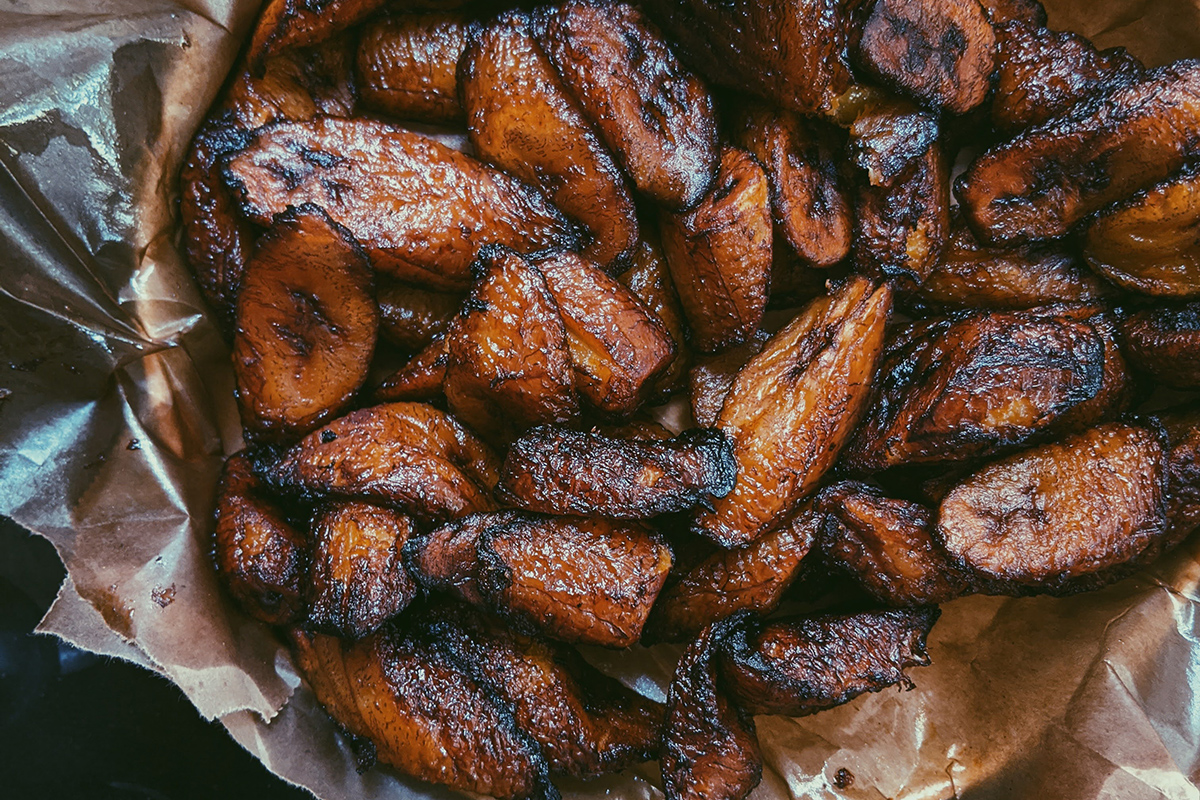
photo by Jasmine Michel
|