 |
| ISSUE NO. 735 |
|
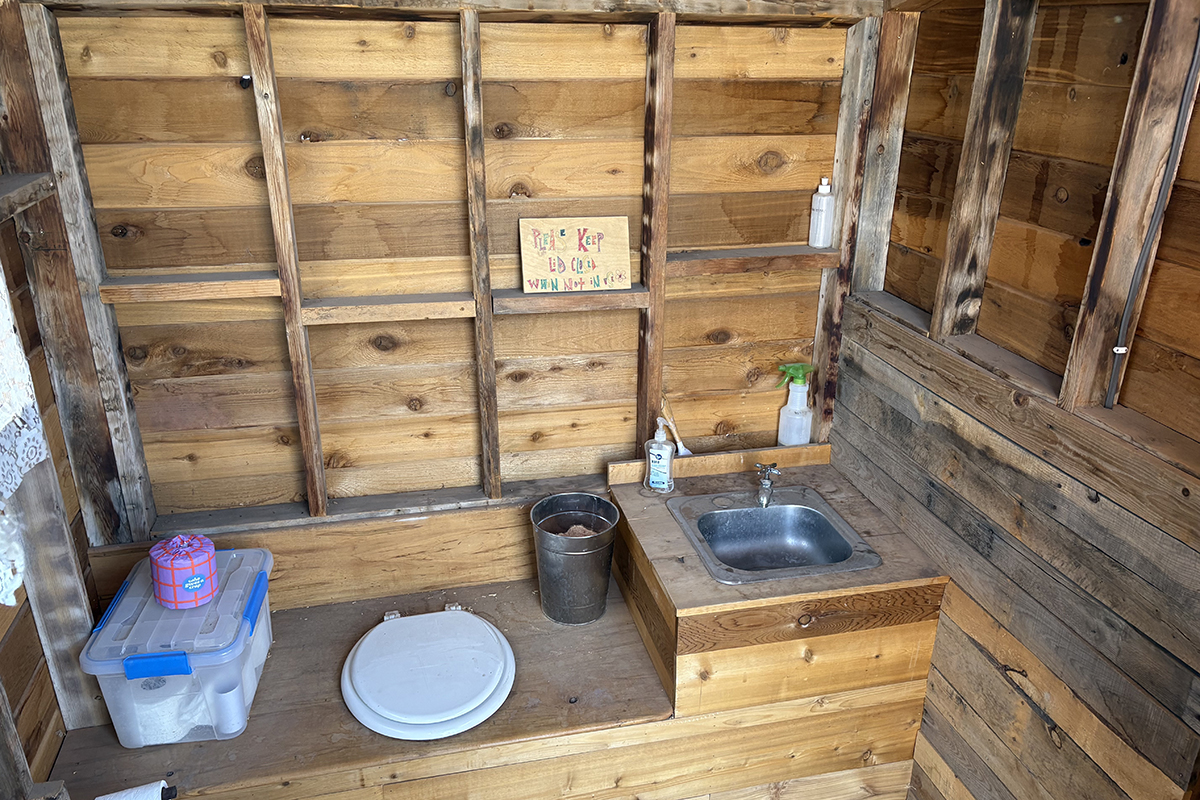
This week's newsletter comes to us from Anita Adalja, Founder/Program Manager of Not Our Farm, a non-profit farmworker storytelling and power building project. Adalja has spent more than 15 years working on small, diversified vegetable farms across the country. Her heart focuses on safety, dignity and financial security for farmworkers. She is also a USDA HGAP+ auditor/technical service provider, Produce Safety Alliance lead trainer and a food safety specialist with La Semilla Food Center where she enjoys exploring the intersections of farm food safety with dignified labor conditions. Bathroom access on farms is the hill I choose to die on. In the 15+ years that I’ve been farming, lack of access to adequate bathrooms is the single biggest issue that I have faced. Within the farmworker community at Not Our Farm, lack of access to safe bathrooms is seen as a widespread problem, one that we regularly receive stories about, and one that deeply intersects with other issues on farms like safety, sexism, sexual assault, capitalist-driven productivity, and ableist culture. I once worked on a farm with several fields spaced far apart from each other. You had to drive to them, and the only porta potty was at our home base, where we washed produce. The porta potty was put in at the beginning of the season, in February or March, and not once was it ever cleaned. It sat in a far corner of the field under trees, full of black widow spiders and poop sludge and flies, giving off a smell that was repulsive. The farm owner was allowed to use the landowner’s bathroom, in her home, but none of us farmworkers - five women - were allowed to. When we realized the porta potty was never getting cleaned or restocked, we took to the woods. We named the porta potty Mons-turd and made jokes about it coming to life and attacking us. But one day I opened the walk-in cooler and found my coworker inside, crying while she stacked crates. I asked her why she was crying, and she said it was because she had to poop and there was no bathroom for her use. She was packing the trucks for market, feeling the intense time pressure of taking a break to hike up into the woods. She also wasn’t comfortable pooping outside, a reality that should not be taken for granted. Anytime our boss saw us walking toward the woods, she loved to heckle us, too. I have countless personal stories like these. Pee tunnels at the treeline edge of the field. Coworkers speeding in farm trucks to the gas station because they were about to poop their pants. Farm owners responding to our requests for porta potties by saying they were “gross” and “too expensive.” Bosses getting upset if someone drove to another field for the bathroom because it was “taking too long.” Jokes about free bleeding in the field. As I learned more about farm food safety, attending Produce Safety Alliance trainings where I experienced workers being scapegoated for E.coli outbreaks, trainers joking about “pooping in the field” and the need for farm bosses to train their staff not to do that, I got more and more angry about the reality that so many of us face. One day, in the middle of a training, my anger bubbled over and I shouted, “You try harvesting and farming for 12 hours without a bathroom and see how long you can keep from pooping in the field! It’s not like we want to.” So began my mission to raise awareness about lack of bathroom access and hand washing stations on farms. You might be wondering how farms can operate without having bathrooms. Farms are businesses, right? Farms literally grow food, so that seems like an obvious food safety hazard. If we found out that our local coffee shop or grocery store didn’t have bathrooms for the employees, and that staff were subsequently forced to poop and pee in the alley next to the dumpster, then come back inside without washing their hands, we would be shocked and appalled! And if the health inspector were to be called, they would surely shut down the business. So how is this happening so often on small farms but going under the radar? Not Our Farm has spent a long time wondering this, too, and we've learned a few reasons why this goes unchecked on small farms: / OSHA (Occupational Safety and Health Administration) has clear restroom and sanitary requirements, but if farms have ten employees or fewer - like the majority of small farms - OSHA restrictions do not apply, and there is no way to report infractions. / Farm food safety regulations (specifically the Food Safety Modernization Act’s Produce Safety Rule) state that workers must have access to bathrooms and hand washing stations, including very clear requirements such as what the bathroom needs to be stocked with, when workers must wash their hands, the maximum distance from the field to bathroom, and so on. But the Produce Rule is only required and enforced by inspectors if farms fall under certain sales brackets - if a farm is not making a certain amount in sales, compliance is not required. Many small farms are not making enough in sales to be “covered” by this rule and are thus exempt. Yet even if you do meet coverage requirements, visits from inspectors vary state by state, and don’t necessarily occur on a regular basis. / The USDA's Good Agricultural Practices (GAP) standards also have specific bathroom and hand washing station requirements - however, this is a voluntary food safety certification that farms will pursue for specific customers like institutions and large corporate retailers. Unless a farm is pursuing this certification, they will not be audited or held to the standards. / Even farms regulated by FSMA or optional GAP certification can still get away with not having access to bathrooms for their workers. We have heard about and experienced farms where auditors or inspectors are told that workers are allowed to drive off site to use the bathroom - they even write it in their food safety plans - when there is no such permission or access. Unless an auditor or inspector makes an unannounced visit, or interviews workers who feel safe enough to be honest, they are not going to hear the truth. We have often been told that on large scale farms, farm operators will bring porta potties out on the day of inspection, and remove them when the inspection is over. Not having bathrooms on farms has been normalized in our society because it’s outdoor work, meaning dirty and akin to camping. The frustrating and dangerous lack of clear laws to protect agricultural workers stems from this country's history of agriculture, rooted in enslavement, stolen land and genocide. When regulations have been put in place, they were not for the promotion of worker dignity and safety, but a bottom-line effort to reduce outbreaks weakening profits (outbreaks have a widespread, national affect on crop sales, grocery stores, farmers, and even seed companies.) All of this forms the foundation for the Bathrooms & Dignity Project. The purpose of this project is multiple: The intersections between labor standards and food safety implications are very real. Supported by the National Farmers Union Foundation's Local Food Safety Collaborative, our 100+ page book is full of farmworker testimonials, horrifying, heartbreaking and hilarious stories about lack of bathroom access on farms, food safety implications of this issue, compost toilet tutorials and blueprints, incredible art and photography, and so much more. |
tidbits...resources on anti-racism, environmentalism and food culture AKA stuff we're reading / listening to / watching / noticing / thinking about / captivated by this Tuesday . . . Do One Small Thing . . . This week's prompt is courtesty of Marisa Renee Lee (who has a new book announcement below!): "I think we can all agree that the world needs more kindness, so I started buying coffee for the person behind me at our local place. It’s a minor, inexpensive, simple thing that, on multiple occasions, has led to a cascade of people paying it forward." Don't buy coffee? Fill in the blank with a grocery item, a subway ride, a spot in line at the post office, you name it - and let us know how it goes. |
 |