|
Today's newsletter is from long-time contributor Jasmine Michel, a chef, researcher, and food &culture writer who dedicates her work to the marginalized. An alumni of The French Culinary Institute and the Eco Practicum School of Ecological Justice, Jasmine runs Dreamboat Cafe, a small food platform of pop-up dinners and underground food journalism rooted in the effects of societal stigma and standards on minority emotional health and liberation.
THE CONCEPT OF 'LOVE LANGUAGES' . . .
became widely known after a North Carolina Pastor, Dr. Gary Chapman, published his now globally renowned book, The Five Love Languages, in the early 90's.
In the book, Chapman expands on what he terms the five main ways we express and receive love: words of affirmation, quality time, gifts, acts of service, and physical touch. In the Western world we have come to herald these love languages as ways to connect to ourselves and each other.
Fast forward thirty years or so into 2025, we have hit a wall. We are screening multiple genocides in real time, witnessing the fall of the American government and society, and the earth is quite literally upchucking herself from dysregulation. It feels impossible to feel something good, and feel good about it. So how do we evolve the languages of our love?
We connect through the elements that serve our life: salt, music in the kitchen, cooking by fire, and the plucking of fruit from trees, to start...but surely that is just the beginning.
When I was younger and attending Islamic Sunday school, madrasa, we were taught how to read the Quran by learning the Arabic alphabet first. Acquainting our eyes to each letter and its curve, which changed depending on its placement in a sentence. It wasn’t until I was older that I recognized we didn’t really learn how to speak the Arabic language fluently. I couldn’t ask for a glass of water, but I could recite the 99 names of Allah (God) and reply “Jazakallah khair” to the aunty serving aloo pies during lunch - a response meaning, ‘may Allah reward you with goodness,’ and a phrase synonymous with the scents of Islamic foods.
It was one of my first lived experiences in which I began to understand that I can connect to others in grounded ways through somatic gestures and simple syllables, despite not knowing an entire language. I feel it most in prostrating through prayer, shoulder to shoulder, and in the gathering of people to be fed. When we are given the opportunity to replenish what we’re being starved of, we’re given a chance at connecting our pain and points of oppression through ingredients and movement.
My father never taught us how to speak Haitian Creole, something my siblings and I hang our heads about each time we are gathered with family. Yet, I learned how to speak our language in different ways. Like the drums of Konpa and the gestures of cooking a good sos pwa and legume. Food has a somatic way of evolving our love languages so that we can understand each other in our bodies despite any distance that comes between us. In the tactile sounds of Konpa drums I hear the rhythm of Colombian and Mexican Cumbia, with stories from the enslaved at its core. That same somatic connection comes from the gifts of our harvests: our beans, our rice reaping, and our ability to understand when to pick citrus (when it’s not too hard and not too ripened). Food is a gateway to both our individual and collective rapture.
When we reclaim ancient and ancestral texts, like Sobonfu Somé’s The Spirit of Intimacy or the Kamasutra, regarding connection and community love, food is often mentioned in terms of milk fats and the land. Where we gather with food is also where we gather with our pain, our confusion, and our disorientation. Ingredients become a gift, and cooking an act of service. Tending to our soil becomes quality time, one that tethers us to memory when we feel the breath of erasure. Memory, being the emotional, mental, and always spiritual portal to our love, often suffers a torrential downpour of colonization to blot out that we exist.
What we're witnessing now is the rollback of programs and initiatives that upkept our presence and dignity through food within American institutions: food pantries, school lunches, farmer’s markets and diversity in the workplace. Not only does that erase the work of advocacy efforts and notable civil rights movements, it erases those who have built the very infrastructure of our nation. The working class parents, families in generational poverty, immigrants, Black and Indigenous people who became disenfranchised for not being able to survive the inaccessibility of basic resources after having all of theirs stripped.
When all the energy has drained and left our faces stretched down with sweat and fright we’re met with tending to a bare spirit stripped of salt and yet still being asked to care. We use love languages not just to love and be loved, but to survive and connect in moments like these. We break the constructs limiting us in seeing ourselves in the pain of others.
So when they come for our people, we will not question how to use our love to feed and free those at risk, in a cell, or suffocating in the margins. When they come for our homes, our trans siblings, our elders, the rights to our body, and the Black maternal, how will you progress our collective freedom despite witnessing death consistently? I challenge you to remain sensitive, to resist desensitization.
I highly recommend the somatic medicine of food and the power of cooking to serve and share. In looking forward to a meal, food intimacy and the land allows us to stay compassionate for what is inhumane even though it hurts to witness. It’s as simple as seeing your basic needs be met, and what basic needs of others that are systematically and historically being neglected. Your sensitivity is your strength and can be found in hot peppers and braised meats, in harsh harvest days, citrus blisters and onion tears.
In remembering our own life death life cycles, I’ll leave you with these words from my partner, who remained present on many of my disassociated days, and who wrote, “Death rejoices not in how brief a time we have to love, death rejoices in how free she makes us of the world.”
Red Beans and Ricely Yours,
Jasmine
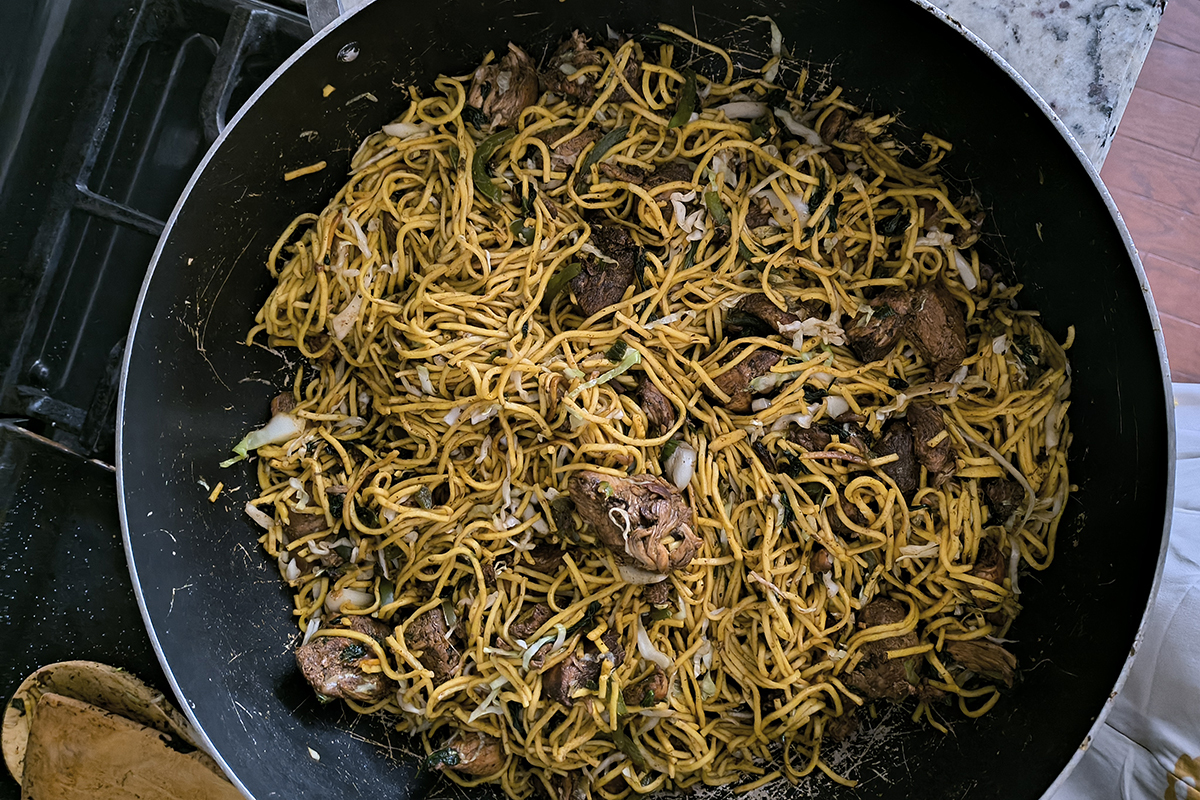
photo by Jasmine Michel
|