issue no. 787
I’VE BEEN THINKING ABOUT LINES IN THE SAND . . .
They are a metaphor, of course. But I’m someone who believes in the transformative power of metaphors, which comes in part from a source of mystery I like to respect by leaving it at peace in its quiet darkness…and in part from the kernel of truth that resounds in them.
As I was thinking about that resounding kernel, I saw how impossible it would be, in actuality - how exhausting and overwhelming - to maintain more than two or three lines in the sand, against the movement of waves on the tide. How many do you think you could sit with, over time, and re-draw? How many would be meditative and meaningful?
I’ve noticed recently that the two or three lines, for me, come from a center of knowing. One that connects directly to the fire of life-giving rage in my belly. Which is not to say that the fire doesn’t get stoked by plenty of other things. Only that I’m beginning to notice when I feel that rage, and know that I need to draw a line…and when I feel the rage, but hesitate to pick up the stick.
Perhaps I can blame some of this ambivalence on raising a teenager. Someone who almost daily holds up a mirror to my self-righteousness and judgments - basically any word, sound, or facial expression that escapes my body without careful thought. Although sometimes that mirror is distorted - after all, I didn’t give birth to the Oracle of Truth, but to another human being, beautiful in her imperfections - I also find that, every time, there’s an important message for me in the mirror, if I’m willing to listen.
There are specific situations in my personal history, in my local community, and in global relationships, that are bringing up questions for me about lines in the sand. I’ve come to learn over the years that moving reflexively or with urgency is always an urge to question. So as I sit with these situations and wonder about them, reminding myself that any answers, if they come, are no more important than this process of sitting…I notice something that seems off about the human approach to a lot of such problems. And it has to do with perfectionism.
When I look at my teenager, I think about how often I have struggled with the desire to eradicate my own fears and uncertainties, through the act of parenting. I once wrote this question in a notebook: What is it we are trying to destroy in our children, so that we can feel sure it will never threaten to destroy us again? (I’ve thought it might be part of a poem that hasn’t coalesced yet…now I wonder if someone out there reading will use it as a writing prompt.) The question came up for me again recently, as I pondered how the decisions we make each day, often according to our most centered values, can also trick us into thinking that we have escaped the harmful systems in which we are entangled. Or that there is some ‘pure’ or ‘perfect’ way to live that will finally allow us the peace of separation from those harmful systems.
I’ve felt the tension of this so strongly as I listen to the kitchen table conversations of Jess Serrante and Joanna Macy on the podcast, We Are the Great Turning. Every short episode seems to hold enormous space for the excruciating heartburn of these problems: What can we do that matters? and Is there any escape from doubt and despair?
I’ve been hearing a lot of messages recently about focusing on actions, rather than outcomes. This reminds me of Macy’s and Serrante’s conversations around faithfulness vs. hopefulness. Hope is a spiritual act - one that I care about nurturing. But for the sake of this comparison - for what it might help us understand, or how it might transform us ‘on the spiral’ that Macy talks about - I want to point out that hope is often about a result; we are hoping for something to happen. Whereas faith - that tricky, excruciating practice - is about what you do, no matter what happens.
I think I already issued the caveat that I’m not in the ‘answers’ portion of my thinking on this yet…but the wisdom I’ve gleaned so far is that the lines we draw in the sand might wear us all down, if we don’t focus on the small collection of them that come from our own place of faith and knowing.
It might seem simple, or ‘not enough,’ to live in this small, daily way. In my experience, it has been the most challenging, and often painful, pathway. But I keep coming back to the sense that there is no way to really live except according to our inner wisdom.
Continuing on the spiral together,
Dor + Tay
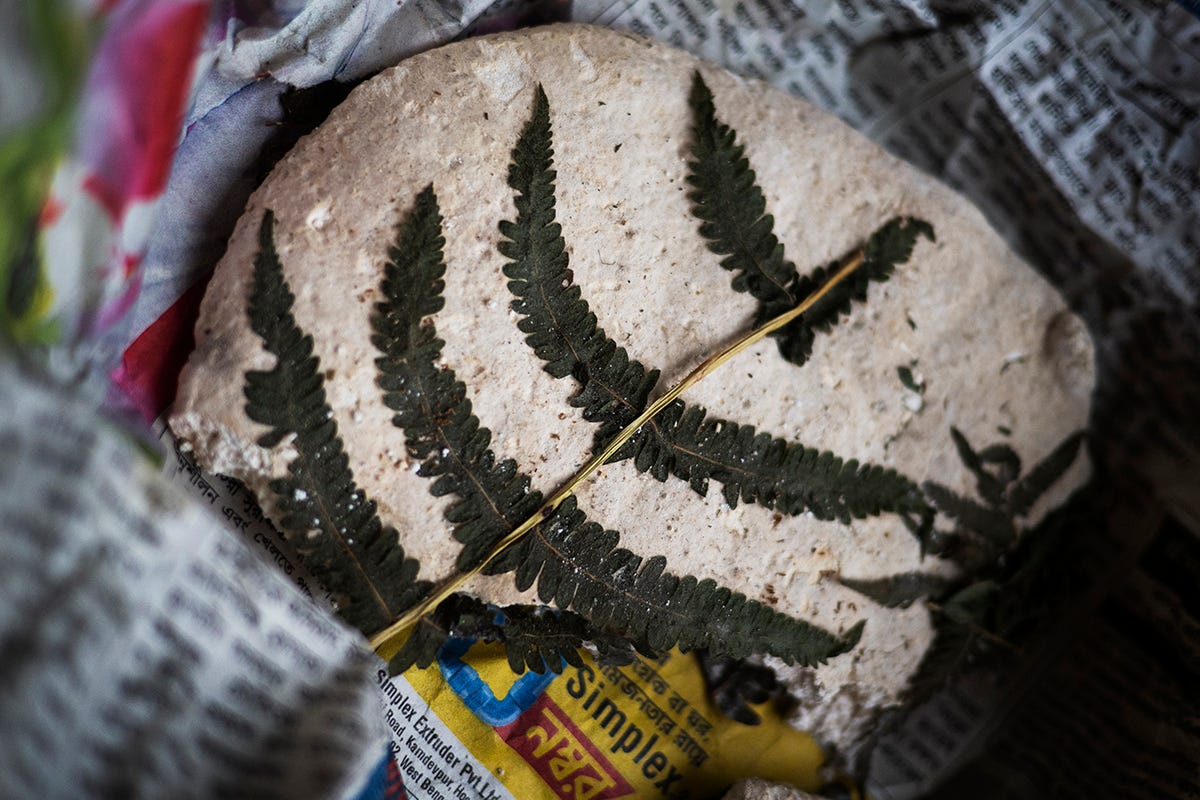
photo by Azra Sadr
"Your newsletter has helped shape how I see my role as an employer, leader and part of the fabric of this community, as much as any other single source...What you say and how you are saying it matters, and lots of us out here are both cheering you on and helped by what you do." - Noah, Newsletter Reader
tidbits...
resources on anti-racism, environmentalism and food culture AKA stuff we’re reading / listening to / watching / noticing / thinking about / captivated by this Tuesday . . .
Do One Small Thing . . . what are your lines in the sand? Where do you feel the tension between hope and faith? Reply to this newsletter, share in the comments, or email us at info@goodfoodjobs.com to let us know.
Starhawk writes on how permaculture informs social relationships, and vice versa.
Today is the last day to sign up for Toi Smith’s Not a Good Woman year-long study and challenge of how racialized patriarchy constructs, restrains, and harms women. Toi is conducting some of the most transformative work of our time, in our humble opinion.
The group project on this Earth - in this and all lifetimes - is building relationships. The Erotics of Liberation bring critical care insight through an upcoming two-day workshop Transformative Justice for Real Relationships: Practicing Intimacy Under Facism.
Robina Khalid exploring unthinkable heartbreak with the tenderness and care that has become a hallmark of her offerings. How we hold space for the hard parts of life matters. We feel grateful for this share that helps shepherd a way through storytelling.
Today is Publication Day for Dor’s first book, Imagine a Woman! Order a copy online, from your favorite local bookstore, or ask your local library to carry it. Subscribe to her monthly newsletter, What the Wolf Wore, to keep up with this and other publications.
Do you love poetry? Have a book club where you already read poetry collections, or would like to? Interested in having Dor drop in - virtually or in-person depending on locale - for a book club discussion? Reach out and let us know.
View and share this free guide to How to Write a More Equitable Job Post, and stay tuned for new resources to deepen this work.
got a tidbit? drop it here for us and we’ll share it in next week’s newsletter.