ISSUE NO. 708
This week's newsletter is contributed by Sanket Jain, whose series on indigenous crops being cultivated by last-generation farmers in India is a must-read in our archives. Jain is an independent journalist and documentary photographer based in Kolhapur, India. He is a Senior People's Archive of Rural India fellow, where he's documenting vanishing livelihoods and dying art forms from India's remote villages, and is also the co-founder of Insight Walk, a nonprofit that offers teaching fellowships to rural community women. These women work to ensure every child in their village has access to contextual education of their choice - at Insight Walk, every student designs their own syllabus. Follow Jain's work on instagram @snkt_jain. 

. . .

THE RARE FARMER . . . 


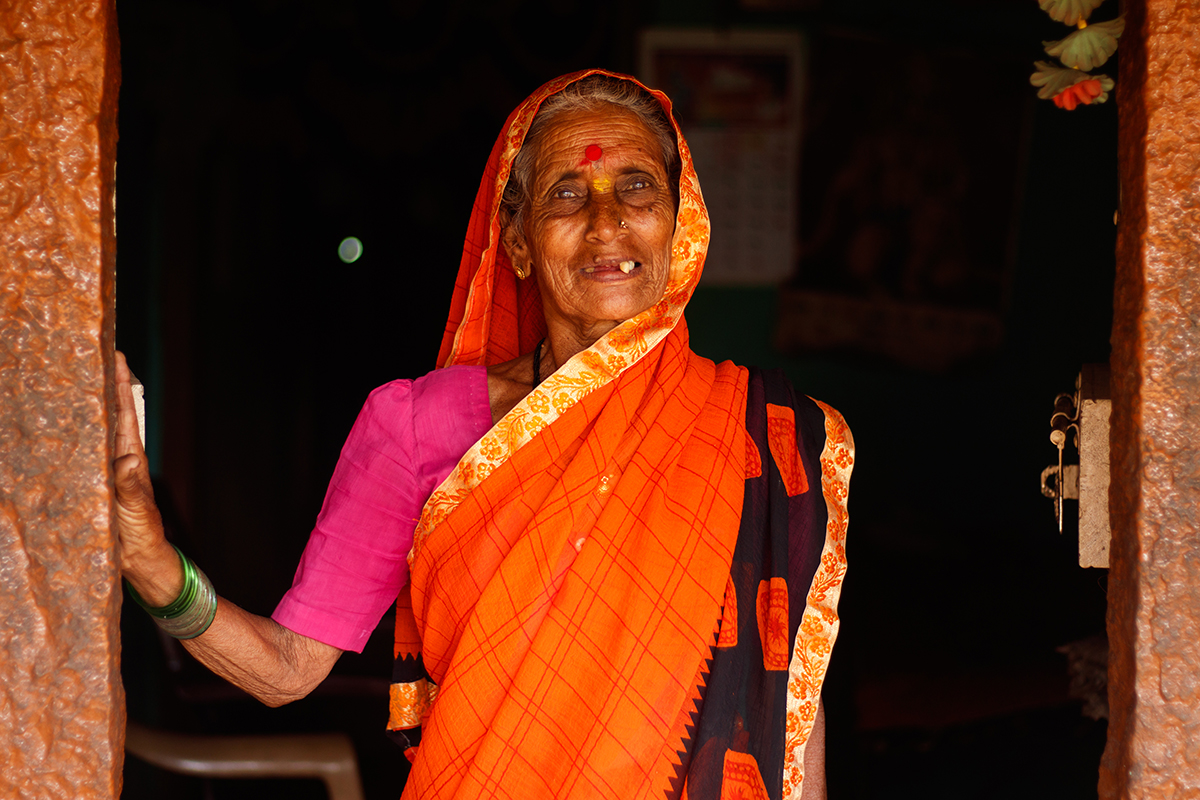
who doesn't need to leave her house to sell her crop - that's Shantabai Kamble.
 

“Every September, people come looking for me to buy chavli (cowpeas),” said the 75-year-old Kamble, smiling. 


Cowpeas (Vigna unguiculata), also known as black-eyed peas, are a popular type of legume widely cultivated for their edible beans, which are a rich source of fiber, protein, and essential nutrients such as folate, magnesium, and moderate amounts of iron. Primarily grown in Africa and Asia, this highly versatile crop can also be utilized as cattle feed and as a means of improving soil fertility.

Globally, eight million tons of cowpeas were produced in 2019, with 96 percent of the harvest coming from Africa, where Nigeria and Niger are the leading producers. Compared to other legumes, cowpeas are particularly drought-resistant, making them ideal for arid conditions.


“People love them because this variety is at least 150 years old,” said Kamble proudly, a fourth-generation farmer in her family. She has preserved and cultivated cowpea for over sixty years in Sarambalwadi village, located in India’s Maharashtra state. “Sometimes, we even boil it and add spices,” to make a healthy breakfast option. Cowpea is used in soups, curries, and stews, among other dishes. In some areas, even its leaves and pods are eaten as vegetables.


Kamble cultivates these tiny, creamy-colored seeds with a smooth texture once a year, in June, and harvests them after three months. Kamble intercrops them with peanuts, black gram, finger millet, and other pulses, which help keep the soil healthy. 


Despite its importance, she claims it has become challenging to find this variety because hybrids, which entered the market a decade ago, quickly replaced the traditional ones. Over the years, more than 30 hybrid cowpea varieties have been introduced to the Indian market, which farmers quickly embraced due to their better yields and shorter harvest times. However, Kamble never followed this trend, believing that hybrids lacked the rich taste of indigenous varieties and were less resilient to climate change. “The traditional variety is resistant to most pests. I’ve never used pesticides on it, yet it has thrived,” she stated proudly. “The traditional varieties are smaller and less appealing, so people tend to reject them.”


It sells for 200 Indian Rupees ($2.30) per kilogram, while hybrid ones fetch only Rs 125 ($1.40). She sets aside two kilograms of cowpea as seeds for the next cycle. “You won’t find these seeds in the market because not many people grow it now,” Kamble said. She doesn’t need to go to the market to sell her cowpeas. “There’s a special demand among older people who come directly to my house to buy them,” she added. “Such is the popularity that I run out of cowpeas.” 


Over the years, a handful of people have brought these seeds from her and started cultivating them. “I am always happy to see farmers taking an interest in this crop and helping preserve it.”


Her husband, Janu Kamble, 78, discussed declining popularity and said, “The younger generation doesn’t even know about this crop, let alone preserve it.” He has noticed that the younger generation has forgotten about nutritious food options and fallen into the fast-food cycle, which is detrimental to their health.


For the Kamble family, there’s a connection between the meals people consume and their health. “The day people begin to realize this, they will pay closer attention to how their food is grown, and that will be the day they start becoming healthy,” she advised. 
 

. . .


We are thrilled and grateful to be in collaboration with Jain through our Share Your Voice initiative, an ongoing effort inspired by the #sharethemicnow movement.
 

Yours in food, justice, and food justice,

Tay + Dor


photo by Sanket Jain

tidbits...

resources on anti-racism, environmentalism and food culture AKA stuff we're reading / listening to / watching / noticing / thinking about / captivated by this Tuesday . . .

Do One Small Thing . . . This week stand up for small farmers affected by the USDA funding freeze. You can use this script from Two Boots Farm when you call your senators and representatives. Five minutes of effort from five thousand people can have a huge impact. 

"‘Give back’ is a counterintuitive term – what if you never took from people and thus never had to give back? ...What if the world’s economic systems became honest about the sweat labour and time that the working majorities offer it and compensated that equitably eliminating the need for ‘philanthropy’?" - Carol Ng’ang’a for Community-Centric Fundraising.

In all of the Super Bowl half-time show discourse, there's a lot of binary thinking - about the performance being wholly revolutionary or anything but. We're grateful to Rachel Ricketts for putting together a 90-minute course to ground everyone in the spectrum of Black Resistance and Radical Hope to guide us forward. The March 1 gathering will be recorded in case you can't make the time listed. 


"When we engage in community with respect and dignity...when we are honest about our resources and access, and we share and give freely - we can build strong and thriving communities." - Monique Melton has launched the Support Black Families: Debt Relief fund, and you can contribute any amount here.

A forgotten farming technique is making a big comeback.

Francis Weller is offering a 3-month Grief Ritual Training for the Climate Aware, starting March 22. Learn more at the Centre for Climate Psychology.

Adrienne Fisher, Nadia Irshaid Gilbert, and Ella St. Hilaire are back with Fierce Heart 2.0. This 5-week workshop will guide participants to reimagine leadership to reflect the needs of these times, giving you the clarity and courage to put your purpose into practice. Pre-sale ends February 19th, so snatch your spot at the discounted rate today. 

Climate change is spoiling food faster, making hundreds of millions of people sick around the world. 


"Although they are largely undocumented in Western scientific language, subsistence economies are incredibly complex. They are also sustainable. What’s not sustainable are cash-based economic structures underpinned by fossil fuels and the fiction of perpetual growth." - Rachel Naninaaq Edwardson for A Growing Culture
 

Marisa Renee Lee on how to rebuild trust when it's been lost.

FIRE (Farming In Relationship to Earth) is designed for aspiring, beginning, and intermediate growers of Black, Indigenous, and Latinx heritage to gain skills in regenerative farming in a culturally relevant, supportive, and joyful environment. You can learn more about becoming a guest facilitator for the 2025 season and apply here by February 19.

The Sundress Academy for the Arts (SAFTA) is in search of workshop proposals from writers, therapists, narrative medicine practitioners, and more for their fourth Retreat for Survival and Healing in Oak Ridge, TN, this October. The two-day retreat for sexual assault survivors will be a safe space for creativity, generative writing exercises, discussions on ways to write trauma, advice on publishing, and more. Click here to learn more and apply.

Grateful for the free offering on February 27th from The Adaway Group about Living, Working, and Leading in a Polycrisis. If you are feeling unmoored, connecting with community in this type of gathering can anchor you. Register here. 


"Plenty has been written about the economic impact of the pandemic on the food industry, but not enough about its lingering effects on the bodies of people whose mission is to nourish us." Read the latest GFJ Story on the creator behind Anjali's Cup, with words by Nicole J. Caruth and photos by Christine Han.

got a tidbit? drop it here for us and we'll share it in next week's newsletter.