|
IT FEELS LIKE EVER MORE PEOPLE . . .
are acknowledging and understanding the shortcomings of our culture. The overwhelm, the atrocities, the injustices that were never really 'far away' even if they felt that way.
And we understand that the greatest collective resistance - for a long time - was to admitting this, largely because of a fear that naming it would actually give nefarious forces more power, or that challenging it would take away the material conditions or conveniences of our everyday lives.
But in the great wisdom of Mister Rogers - if it's mentionable, it's manageable. Speaking truths out loud - even, or especially, when they are scary or uncomfortable - opens up the opportunity to process them.
There are a great number of people and practices that we admire that neither ignore pain and suffering, nor succumb to them. They quite literally transmute pain into a practice of love and connection. We think of the traditional Tibetan Buddhist practice of tonglen meditation, or the Twin Cities Singing Resistance group.
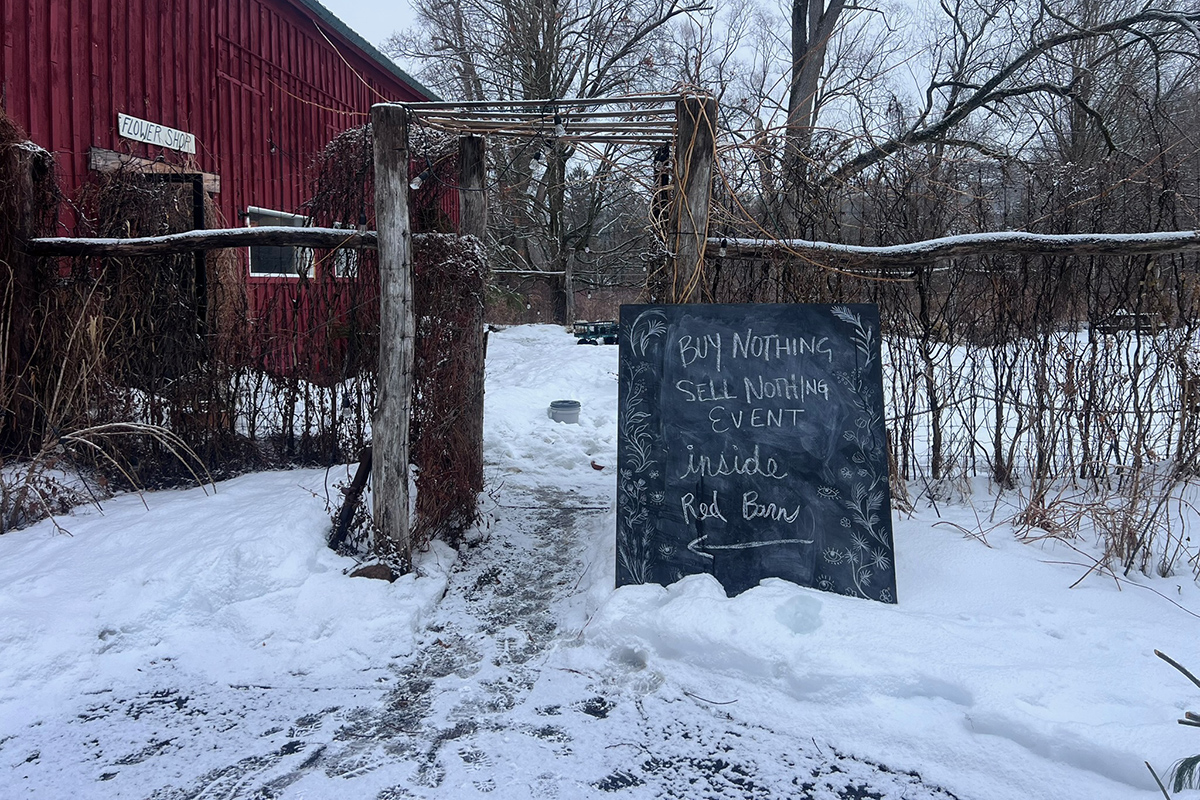
Last weekend, I scurried over to my friend Kate's flower farm - a beacon of hope not just in the beauty she fosters with flowers, but in the way that she shares physical space - the fields and the barn - to invite people in and create magic among community members. While the parking lot commonly hosts The Soup Stand, and the Common Freezer, on this particular Saturday of the 'off-season,' she was hosting a Buy Nothing, Sell Nothing gathering in the barn.
I brought over a bunch of beloved, but extraneous items that I no longer had use for (and for many months couldn't bring myself to anonymously donate to Goodwill). As I unloaded my trunk, each time I came back into the barn, I'd hear someone say something to the effect of, "OOOOOh! Look at this!" With zeal, they'd gush over what they planned to do with their find. (My favorite was a woman who was so eager to take home a 2ft x 1ft marble tile that was an extra from a relative's home renovation . . . she said it was PERFECT for her cookie baking).
I walked out with a candle holder and candles, which have been such a welcome part of this past Winter, and a skein of yarn for my youngest kiddo to practice with.
It was an incredible reminder that we all carry so much. And that when we share what is weighing us down, we make space to support and uplift each other, whether that is physically or emotionally. So before we go, we want to share some thoughts from readers that resonate in this very same way:
from Lizzie: "I appreciate the message encouraging small steps to increase joy and pursue our passions. But I also wonder, what happens when even small things can’t compensate for the inability to access land and generate income—especially when that access is essential for our well-being and sense of purpose?...I’d love to share a message with other landless farmers who receive GFJ's newsletters: you are not alone. We are working toward doing what we love, and we will get there. Reach out, collaborate with fellow farmers, foodies, and landowners. Share your story. Think creatively. Don’t give up!"
from Amanda: "Two heart-opening and warming small actions: the first, a galentine’s day dinner where we each just happened (without coordinating) to offer gifts - handmade bouquets, clothing ready to be rehomed, popcorn from the garden, sourdough, face masks! It was such an unexpected and beautiful reminder that we are all showing up for one another. The second was a 50k trail run race - we had a large showing from our local trail community and we all shared and collaborated on a meal the night before….and despite many many hours being between the first and last finishers of our friend group, we were unrelenting in our cheers and supports for each person to cross the finish line…one friend, even handing out valentines day cards to us during the race when we crossed paths!"
from Lowell: "For me [the most meaningful small action] is planting seeds. It may be sowing a small plot of tartary buckwheat or a large and interplanted area of corn, cowpeas, and sweet potatos. In mid summer, the corn canes tower above me 10 or 12 feet tall, and creates a bright green cathedral where the Great Mother is worshiped in her endless giving. Planting seeds feels like building a house every year. It takes a few months to co-create, and as it becomes, the lizards and frogs, numerous insects, and the wonders of this world call it home."
Warmly,
Tay + Dor
|