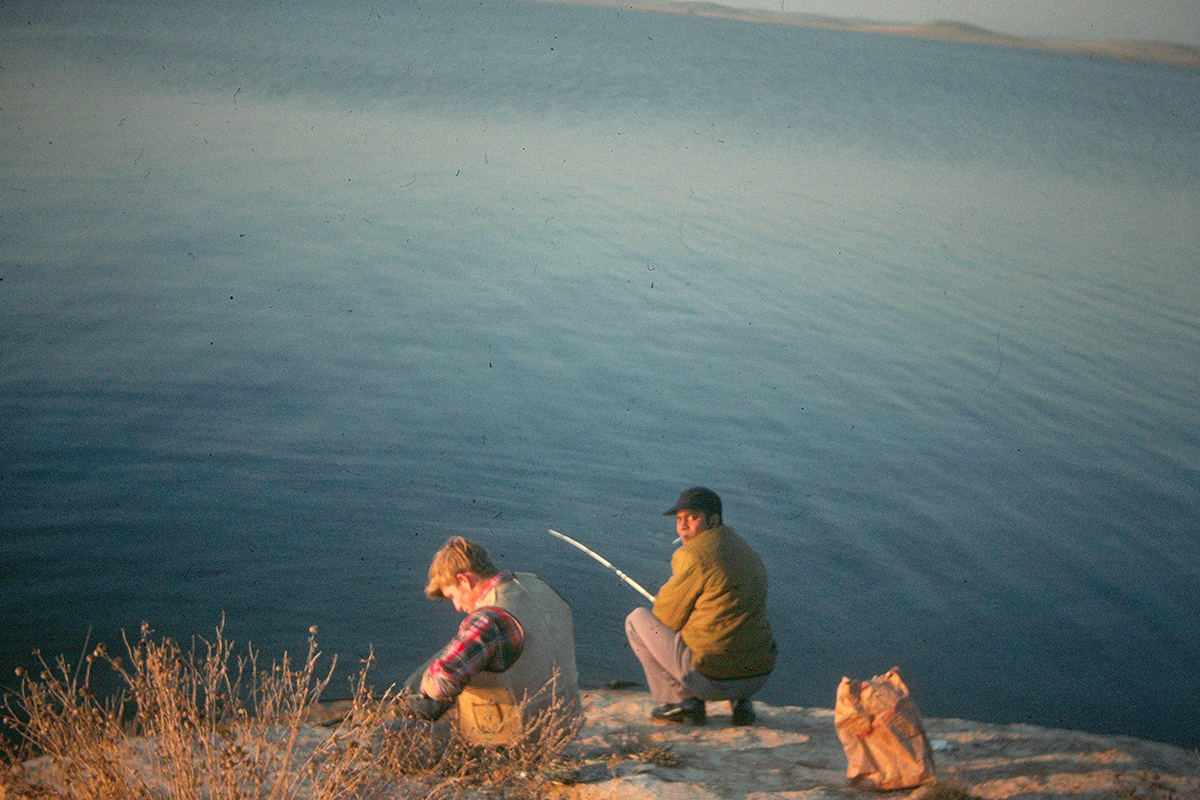
Louie Boer is a college chum of my father's, a peach farmer, and somewhat of a mythical figure. I remember him visiting the house when I was a kid, driving down from Modesto in his ginormous truck, wearing a thick lined windbreaker and work boots.
He is a big guy - towering, Dutch, and agricultural. Louie is the kind of guy you look at and think, "Your mom fed you well growing up." As gentle as he is big, Louie is a rugged but soft-spoken intellectual. I remember sitting at the dinner table listening to him and my dad talk about the good old days, fishing up the Central Coast, reading, and just being free outdoors. They talked about life, God, and family while my mom served Louie Indian food - puffed up rotis, sautéed vegetables, and my dad's chicken curry.
About a month ago, Louie got COVID, and then a couple of weeks ago, he disappeared. My father grew desolate trying to reach him, and every day he would talk to some friend or another and tell them all about Louie and the good ol' days, when they were roommates at Modesto Junior College, and then Cal Poly San Luis Obispo.
One day, as I was watering my plants, I started googling Louie on my phone. I came up with a short list of phone numbers. I was going to hunt for Louie.
A woman named Bertha answered my third call - Louie's 95-year-old mother. I had a hell of a time explaining who I was, but she remembered my dad and told me Louie was alright: “He's back on the farm, honey!”
The next morning, Louie called. He explained how his phone crashed a week earlier and he lost all of his numbers. He considered me calling to be God at work because he was worried about how to reach my dad. Somehow our conversation expanded into a philosophy of how beautiful and intricate life is. We talked about his friendship with my father, and how it's been something he has turned to throughout his life for strength and inspiration.
I know the same is true for my father; when he was calling people trying to find Louie, he kept saying how Louie was his "first American friend". Knowing my father and his story, coming to this country from Varanasi, India, I knew what that could mean -- the friendship of a native White man in a strange land.
Louie told me about his time in the Peace Corps, something I knew nothing about. Growing up disillusioned with Vietnam, he joined the corps in college and went to Liberia - at the time, still a small, developing nation in Africa. Louie comes from a long line of Dutch American farmers, and he learned a lot about village life during his time in Africa, developing an understanding of local growing and eating traditions.
Months after he returned to America, he developed malaria. Louie shared with me how my dad took care of him during that time when they were roommates. Growing up in the subcontinent, my father was familiar with the disease. Louie also told me about parties with their gang of guys, and how my dad's Indian food was always a hit with the gringos. And we laughed.
The small friendship I developed with Louie is multi-generational; it came through my father and his generation's ability to develop strong, lifelong connections, and from two men who never neglected their shared history as young people trying to figure things out. They treated friendship as a boon from the universe.
It all made me wonder: What I am doing with my time and my life? How could I expand my contributions to the planet and other human beings? What is true? How can I most authentically show up?
All of the petty concerns of the day, the last few weeks and months, even this pandemic year, fell away. In their place stands this inexplicable faith that life can be full of meaning at every corner if we fill our days and moments with connections that matter -- to the earth, our work, and each other.
. . .
We are thrilled and grateful to have collaborated with Swati through our Share Your Voice initiative, an ongoing effort inspired by the #sharethemicnow movement.
photo courtesy of the author