This week's newsletter is the first in a series of three guest posts on job quality in sustainable food systems by Sophie Kelmenson, a postdoc fellow in the Department of City and Regional Planning at the University of North Carolina at Chapel Hill. Sophie reached out to us in 2019 with a research proposal that would use data from GFJ's archive of job postings to study labor demand and job quality in the field of alternative food systems. You can read Sophie's full paper in the Journal of Agriculture and Human Values here.
Please note that all of this data was gathered between the years of 2010 and 2019, before GFJ implemented a $15 / hour minimum wage for all jobs.
It is also important for us to note that all data was used anonymously and in good faith - there was no exchange of money or goods in any aspect of Sophie's research and publication.
THE PANDEMIC UNDERSCORED...
what we already know: we need alternatives to the industrial food system.
We also know it takes work to build these alternatives. Job openings posted on sites like Good Food Jobs reflect the myriad ways people are engaged in building new systems that strive to be sustainable and equitable.
But failing to offer high quality jobs in alternative food systems, especially as alternatives grow in number and scale, risks expanding an exploitative food system rather than dismantling it. As I embarked on this project, I wanted to know: what exactly are the jobs involved with this work? How are people compensated for contributing their intellectual, physical, and financial resources to build these alternatives?
In this first of three opportunities to share my process and results with the GFJ community, I want to provide some background findings from the data. Next week, I'll delve more deeply into the markers of quality in those jobs, before finally wrapping up with a discussion of strategies to improve job quality.
Sifting through ten years of job postings, I found...
The majority of job openings directly involved work in the food chain.
- The most common categories of occupations were in Food Preparation and Serving (37% of all job openings), Sales (13%), Farming (10%), and Production (8%).
- Openings within the largest categories, Food Preparation and Serving and Sales, were primarily entry-level.
- Many openings for General and Operations Managers were in unique organizations like food hubs, farm-to-institution programs, cooperative associations, and small businesses.
- Openings in Business and Financial Operations, Community and Social Service, Office and Administrative Support, and Manager were important supports.
Community and Social Service organizations contribute an outsized amount to alternative food systems development.
- Community and Social Service Specialists were among the most common types of job openings, suggesting their unique role.
- The loci of this work – community health and economic vitality, sustainable farming, and policy advocacy – reflect long-term challenges for the food system that are often the inspiration for building alternatives.
Most hiring firms were small, and relied on direct-to-consumer sales. However, alternative food systems may be in the process of scaling up.
- Contrary to industrial farms, farms posting on GFJ were smaller, and produced both animal and vegetable products.
- Most sales openings were at direct-to-consumer operations. While there were fewer openings for wholesale sales, the number of openings increased over time.
- General Managers at food hubs, farm-to institution programs, and cooperatives were tasked with building broader production and distribution infrastructure, suggesting growth.
- Increased openings at food manufacturers suggests increases in scale.
- Openings in Business and Financial Operations and Office and Administrative Support suggest firms' need to build out support services as they grow.
See you next week to talk in more depth about job quality...
To learn more about Sophie's research, read her paper, "Between the farm and the fork: job quality in sustainable food systems" or reach out to her via email, where she would be happy to discuss this or related projects that you might have brewing.
Yours in food justice,
Dor + Tay
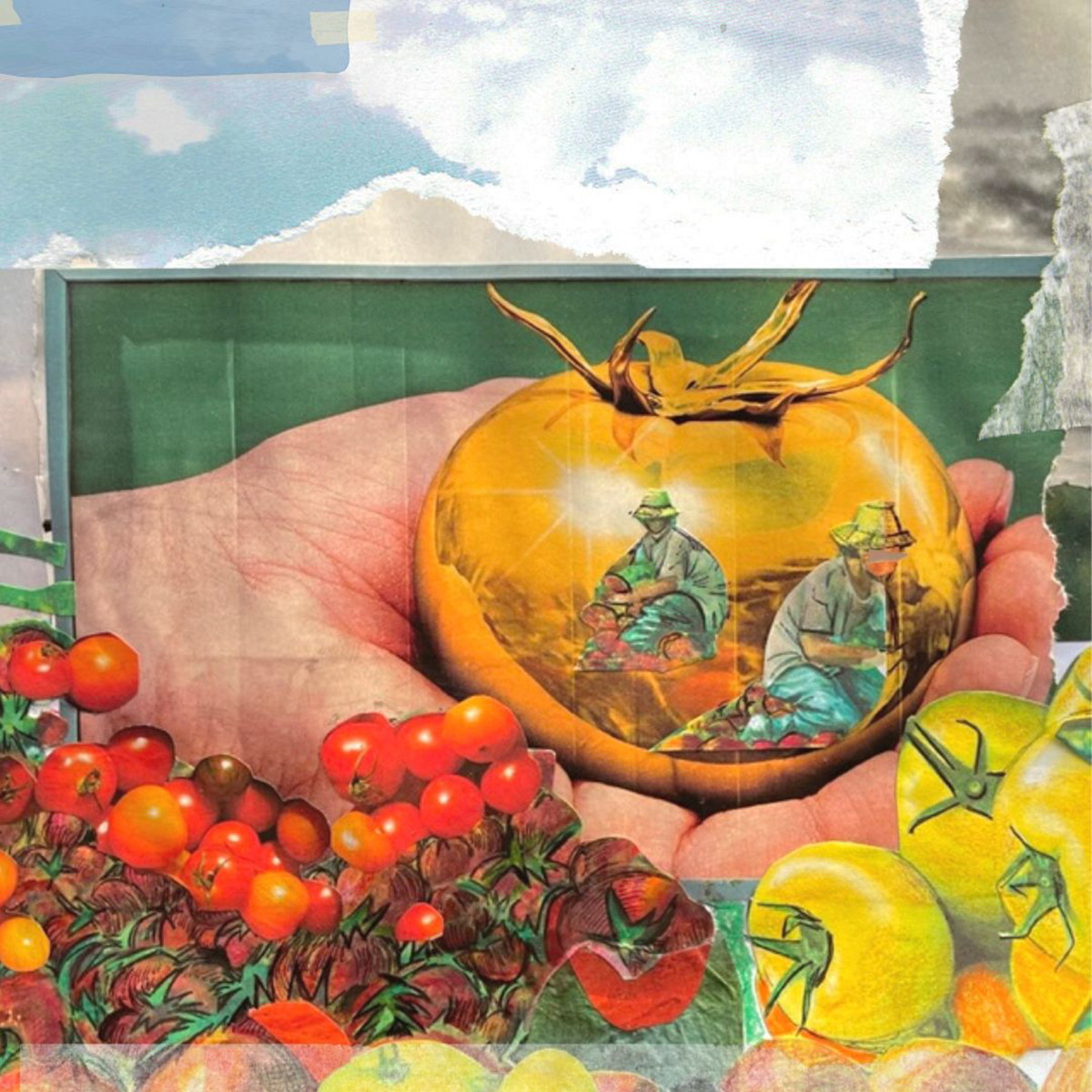
original artwork by Candace Caston, using an AI image generated by DALL-E
|